

Blog
Blog
The Greek real estate market is entering a new phase, as developments in recent years have created a more complex market in which location, quality and property type play an increasingly important role.
The picture is not the same across the country. Athens, Thessaloniki, Halkidiki, Crete and the popular islands are following different paths, with demand being significantly influenced both by buyers’ incomes and by investment interest from abroad.
The market is essentially divided into two major categories. On the one hand, there are lower- and middle-value properties, which are mainly purchased for residential purposes or as a source of rental income. On the other hand, there is the high-end market, where location, construction quality and lifestyle are key considerations for buyers.
At the same time, the middle segment appears to be facing greater challenges. Buyers are becoming more cautious, while in many cases sellers continue to ask for prices that do not fully reflect the new market conditions. As a result, negotiations are becoming more common, particularly for older properties.
One of the main reasons why residential property prices remain under pressure is the limited supply of new homes. Construction costs remain high, while modern energy and building requirements are making new developments increasingly expensive.
At the same time, rising material costs and the shortage of skilled workers are creating additional obstacles. For many construction companies, developing new projects is no longer as straightforward as it was in the past, especially when the combined cost of land and construction cannot easily be reflected in the final selling price.
A significant part of the discussion also concerns vacant properties. Although thousands of homes remain outside the market, bringing them back into use is not always an easy process. Co-ownership issues, inheritance disputes and unresolved legal matters can prevent properties from being utilized for years.
In addition, the cost of renovating an older property has increased significantly. In some cases, purchasing an old apartment and completely renovating it can approach the cost of a newly built property. This is encouraging a growing number of buyers to choose newer construction, even when the initial purchase price is higher.
The profile of foreign buyers is also changing. Stricter requirements for the Golden Visa have reduced part of the previous demand from buyers outside the European Union, while increased interest is coming from European countries such as Germany, Austria and Switzerland.
At the same time, digital nomads and remote workers are becoming increasingly visible in the Greek property market. These are people who earn their income abroad but choose to live permanently or for extended periods in Greece.
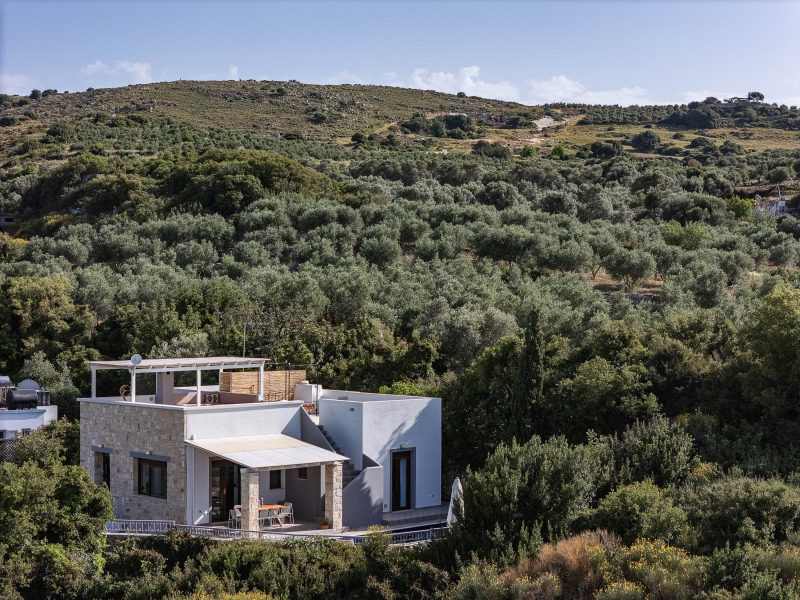
Particularly interesting is the growing interest among some foreign buyers in old and abandoned properties in rural Greece. Areas of Crete, the Peloponnese and the Greek islands are attracting people looking for traditional houses or historic buildings that they can renovate and transform into permanent or holiday homes.
This trend is creating a different form of investment, which is not limited to purchasing a ready-to-use property. In many cases, buyers are investing in the gradual restoration of older buildings while also seeking to become part of the local community and establish a life in rural Greece.
Against this backdrop, the Greek real estate market appears to be moving beyond the period of generalized price growth and entering a more complex phase. Not all regions are moving at the same pace, and not all properties have the same prospects.
The major challenge for the coming years will be increasing the supply of housing. Without more properties becoming available, demand will continue to put upward pressure on prices in areas where supply remains limited.
At the same time, simplifying procedures, completing the Land Registry, expanding the use of the Electronic Building Identity and resolving legal and ownership issues more quickly could help bring a significant number of properties currently outside the market back into use.
The future of Greek real estate, therefore, will not depend solely on the number of buyers. It will depend mainly on whether the market can create more housing, make better use of the existing building stock and adapt to the different needs of each region.
Source: Capital.gr, based on information and statements included in the referenced article and material from Deutsche Welle.